
Travel Permit & Visa for Pilgrims
Indian nationals are subject to additional restrictions when applying for a Tibet Travel Permit (TTP). You are required to apply for the permit a minimum of 30 days in advance of your intended date of travel. This time allows the Foreign Affairs Office to conduct background checks.
*If you are not an Indian passport holder, please refer to the general Tibet Travel Permit page.
Permit Guide for Indian Pilgrims Traveling in Tibet
When entering the Tibet Autonomous Region (TAR), you must do so through an authorized tour company. Exploring alone or taking part in any form of unguided tour inside the TAR is strictly prohibited under PRC laws.
1. Invitation Letter
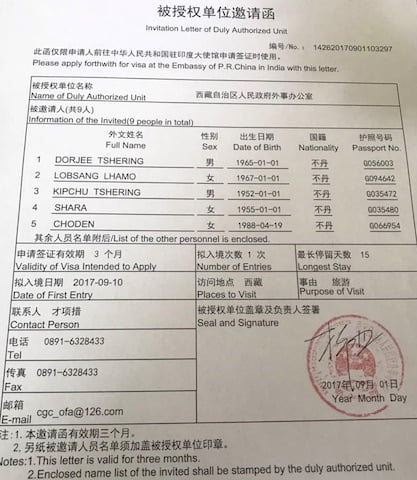
Requirements:
- Passport Validity: All Indian pilgrims must hold a passport with at least six months of remaining validity.
- Age Limit: Travelers from India must be under the age of 70. Since 2016, pilgrims above 70 are restricted and cannot obtain a permit, which might result in the rejection of the entire group.
The Process:
If coming from Kathmandu, you must obtain a Tibet Group Visa from Kathmandu or New Delhi. Once you send us clear copies of all member passports, it takes around 2 weeks for us to process the Invitation Letter & Tibet Travel Permit via the Foreign Affairs Office in Lhasa.
After processing, we will send you the scanned invitation letter. You will then need to go to the Chinese Embassy in Delhi or Kathmandu in person to process your Tibet Group Visa. This typically takes 3-5 working days.
With the invitation letter from our Tibet travel agency, obtaining the Tibet Group Visa is straightforward. Your travel permit will be processed before you arrive and will be held by your Tibet tour guide during your trip.
2. Name Lists
A finalized name list is crucial for starting all paperwork. Our travel agency in Tibet will compile this according to the passports provided. It is highly recommended to send us clear, high-quality scans of your passports to avoid any typing mistakes that could cause entry issues.
3. Border Permit (Military Permit)
A Border Permit, also known as a Military Permit, is required if you plan to travel to militarily sensitive areas in the TAR, such as:
- Ngari (Mount Kailash & Lake Manasarovar)
- Nyingtri (Nyingchi)
- Nagchu
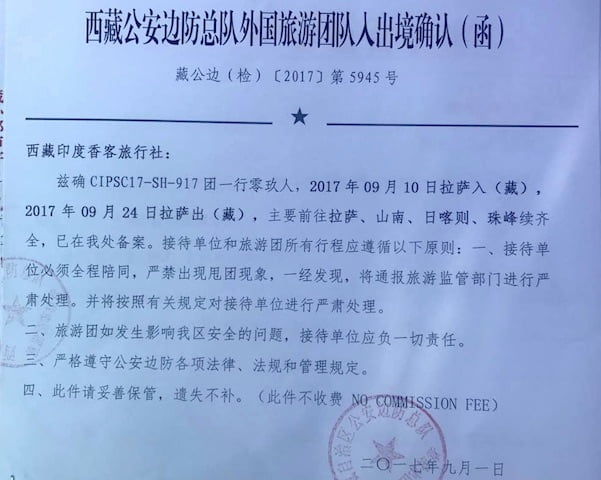
This permit is issued exclusively by the Military Base (PLA) in Lhasa and can only be arranged through our licensed Tibet tour company. To apply, we need your passport information and your Tibet Travel Permit. Issuance typically takes 3-5 business days.
4. Permit for Non-Resident Indians (NRI)
Non-Resident Indians (NRIs) holding valid foreign passports (non-Indian passports) are generally eligible to issue a Tibet Travel Permit following the same procedures as other foreign nationals, without the additional restrictions placed on Indian passport holders.
Why Choose Tibet Discovery?
We are a local agency based in Lhasa.
Permit Guarantee
100% success rate on Tibet Travel Permits.
Local Experts
Authentic Tibetan guides based in Lhasa.
100% Flexible
Private tours tailored to your pace.
24/7 Support
Always here for you via WhatsApp.
Frequently Asked Questions
Do I need a visa or special permits to visit Tibet?
Yes, international travelers require a Chinese visa to enter China and a Tibet Travel Permit to visit Tibet. Additional permits, like the Alien Travel Permit and Military Permit, might be needed for certain restricted areas.
What is the best time to visit Tibet?
The best time is between April and October, with May to September being ideal for warmer weather and clearer skies. Winter (November to February) is also an option for fewer crowds and lower costs, though it’s much colder.
Is altitude sickness a concern, and how can I prepare?
Yes, Tibet's high altitude (e.g., Lhasa is 3,650 meters/12,000 feet) may cause altitude sickness. To prepare:
- Acclimatize for 1–2 days upon arrival.
- Stay hydrated.
- Avoid strenuous activities early on.
- Consult your doctor about medications like Diamox.
Can I travel to Tibet independently?
No, international tourists must join a guided tour organized by a licensed travel agency. Solo travel without a guide is not permitted.
How do I get to Tibet?
Options include:
- Flights: Direct flights to Lhasa from major Chinese cities like Chengdu, Beijing, and Xi’an. Or, you can take a direct flight from Kathmandu.
- Train: The Qinghai-Tibet Railway, which offers scenic views, runs from cities like Xining and Chengdu.
- Overland: From Nepal via the Gyirong Port.
What are the must-visit attractions in Tibet?
- Potala Palace: Lhasa’s iconic landmark.
- Jokhang Temple: Sacred Tibetan Buddhist temple.
- Mount Everest Base Camp (Tibet side): Stunning views of the world’s highest peak.
- Namtso Lake: A picturesque sacred lake.
- Mount Kailash: A holy mountain for pilgrims.
What are Tibet’s accommodations like?
Accommodations range from luxury hotels in cities like Lhasa to basic guesthouses in remote areas. Be prepared for limited amenities in rural regions.
What should I pack for a Tibet tour?
Essentials include:
- Warm clothing (layers are best).
- Comfortable walking shoes.
- Sunglasses and sunscreen.
- Personal medications.
- A reusable water bottle.
Is Tibet safe for travelers?
Yes, Tibet is generally very safe. The main challenges are altitude sickness and weather conditions. Always follow your guide’s instructions and respect local customs.
Can I travel from Nepal to Tibet?
Yes, the Gyirong Port is the overland border crossing between Nepal and Tibet. A special Tibet Group Visa is required, which can be arranged through your travel agency.